
The Cost of the "Frankenstein Handoff" in Leisure and Tourism Booking Journeys.
Mat Hope | 10 September 2026 | 5 min
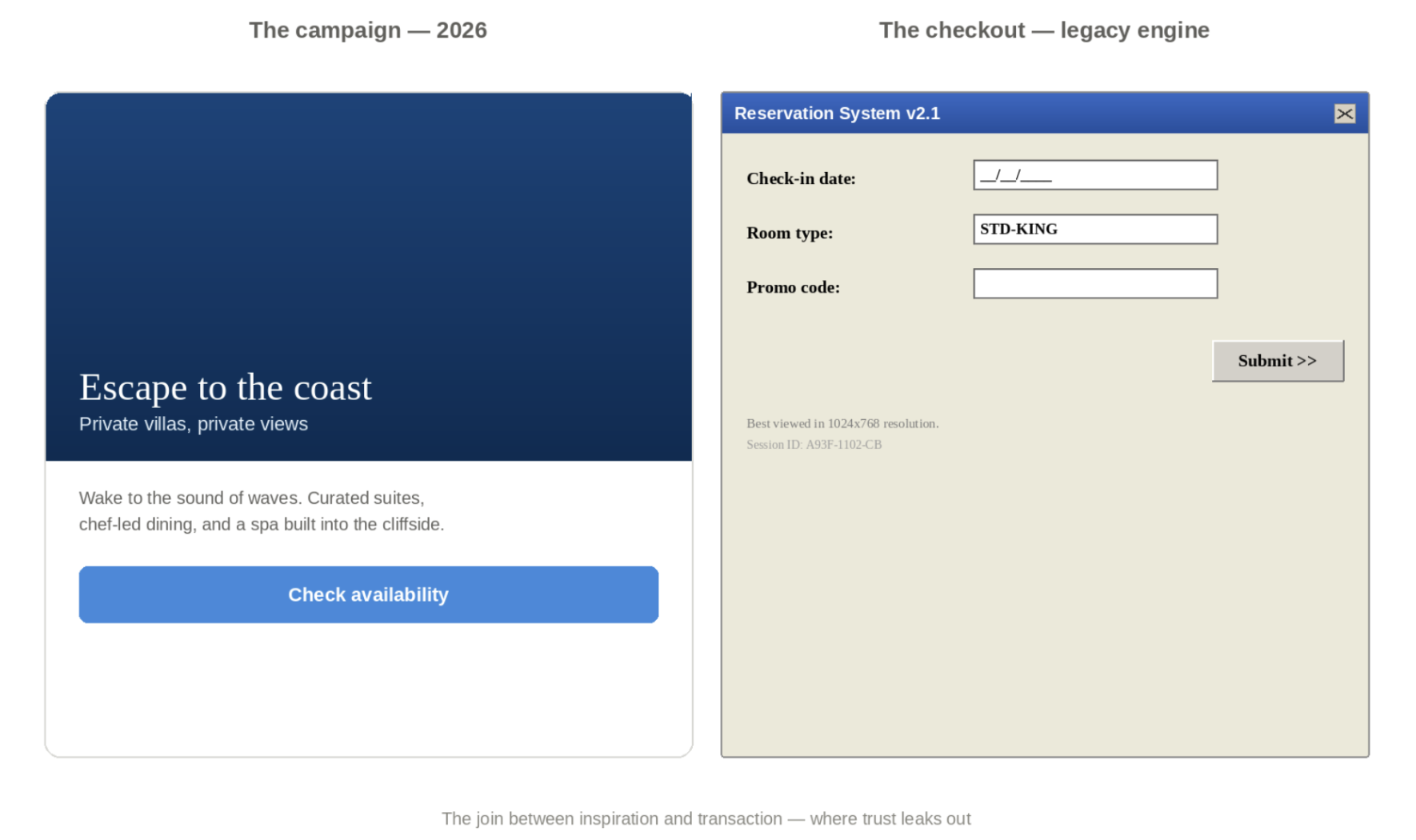
Your team spends months crafting a beautiful campaign to inspire potential guests, only for them to hit "Check Availability" and land on a dated checkout page that looks like it belongs in 2004. The join is painfully visible.
This is what we call the "Frankenstein Handoff." It’s where legacy technical debt meets UX friction, quietly leaking direct revenue away from your brand and straight into the hands of OTAs. The moment that journey feels disjointed, consumer trust evaporates, and guests retreat to familiar booking channels.
The Psychology of the Drop-Off: Why Seams Break Conversions
At LAB, we know that technology without human understanding means nothing. If you want to grow your revenue, you have to diagnose how guests actually decide and remove the friction holding them back. When a guest experiences a "Frankenstein Handoff," several subtle psychological biases trigger all at once:
Cognitive Friction & Risk Aversion: An abrupt shift in design language and domain name interrupts the guest’s relaxed emotional mindset, forcing their brain into a cautious, analytical state. This friction triggers risk aversion, making them second-guess their purchase.
Erosion of Trust Signals: High-value leisure bookings require high trust. When visual consistency vanishes, the brand's perceived legitimacy drops instantaneously, weakening the emotional connection built during browsing.
The "Price-Comparison" Pivot: Once trust is shaken, price-sensitive guests immediately bounce off your direct site to aggregate platforms and OTAs that offer familiar choice architecture.
The Tug-of-War Between CMOs and CTOs
How do leisure and tourism platforms end up stitched together like this in the first place? Most operators rely on legacy PMS, CRS or booking engines that are deeply integrated into their day-to-day operations. Rebuilding these core systems from scratch is risky, expensive, and stressful. This creates a natural deadlock between internal teams:
The CMO’s View: They want a seamless, human-first journey from the first click to the final booking confirmation. A clunky handoff damages brand equity, breaks emotional momentum, and burns marketing budget.
The CTO’s View: They are risk-averse for good reason. Their job is to protect the secure, proven booking engine that keeps the business running. They can’t justify a total "rip-and-replace" project that risks destabilising core operations.
The trap is believing you have to choose between brand experience and technical stability. The reality? You don't.
Fix the Journey, Don't Replace the Engine
Instead of gambling on a massive, disruptive rebuild, the answer lies in taking an incremental, composable approach.
By building a decoupled, headless presentation layer, you can skin the legacy platform invisibly. This allows you to orchestrate between systems and deliver a unified visual language without touching the underlying engine.
Here is how a composable approach bridges the gap:
Protects Core Infrastructure: Your underlying availability and pricing systems stay intact, secure, and operational. Your technical architecture remains stable.
Unifies the Guest Experience: The friction-heavy interface is replaced with modern, light front-end components. The guest stays on the same domain, surrounded by the same brand identity throughout their decision-making process.
Keeps Interactions Snappy: By consuming booking data through clean APIs and smart caching, pages load instantly, keeping guests confident and engaged.
Empowers Marketing Teams: Marketing teams can update messaging, date ranges, and promotional nudges directly within the CMS, avoiding long development bottlenecks. They can seamlessly layer in behavioural nudges, such as scarcity cues or contextual trust signals, to guide guests effortlessly toward conversion.
A prime example of this in action is a recent project we delivered for a client with a high-traffic page on their website that allows users to search for last-minute bookings across their estate. While the page generated strong interest, it hadn’t been updated in years and felt tired and disjointed.
Rather than ripping out the booking engine or disrupting backend operations, we overhauled the front-end experience around it. By building a dynamic React component, we transformed the journey into something fast, modern, and on-brand, all while leaving the core tech intact.
That’s the power of a composable approach: you don’t need to replace the entire engine to completely transform the experience.
When you put Behaviour Before Build, you stop wrapping old problems in expensive new code. You simply remove the obstacles standing between your guests and their decision to book.
Key Takeaways
Seams destroy trust: A sudden shift in domain or design during checkout causes instant hesitation, driving guests toward OTAs.
You don't need a total rebuild: You can modernise the guest-facing experience without replacing your secure backend booking engine.
Composable tech creates flexibility: Decoupling your front end lets you fix UX debt, improve site speed, and respond to changing audience behaviours fast.
Human-first design protects margin: Keeping the journey smooth and cohesive keeps guests inside your brand ecosystem, protecting long-term commercial impact.
If your current booking flow is creating friction for your guests, it's costing you direct revenue. At LAB, we help leisure and tourism brands replace expensive assumptions with tested insights and flexible, composable platforms.
Get in touch with our team today to explore how we can turn your digital experience into your strongest growth engine.