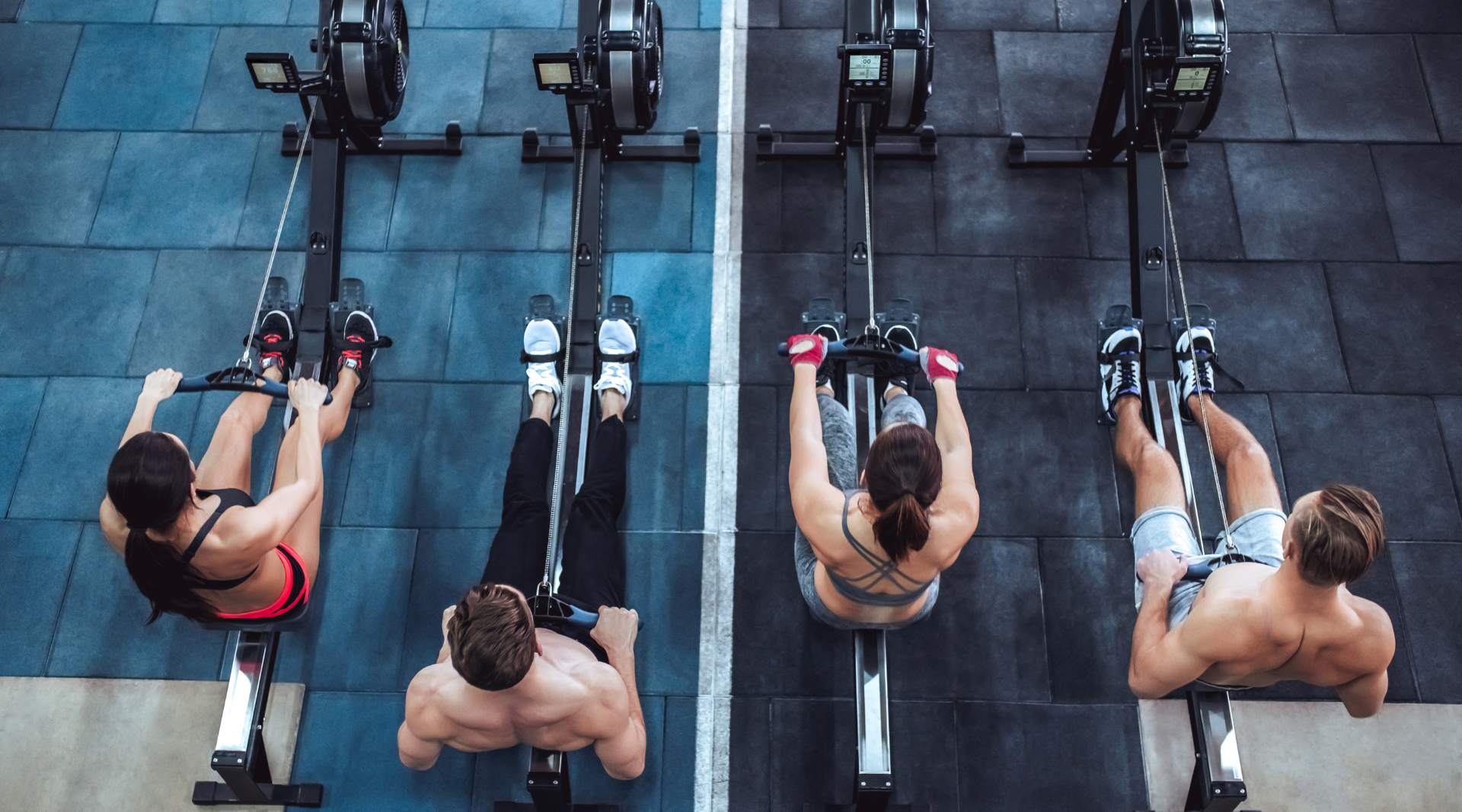
What HYROX, Padel and Reformer Pilates All Have in Common, And What Leisure Brands Can Learn From Their Rise
Dean Corney | 3 June 2026 | 5 min
A decade ago, aspiration was largely built around nightlife, fashion and where you were seen. Today, it increasingly revolves around wellness, discipline and participation.
HYROX events sell out in minutes. Padel courts are oversubscribed across the UK. Reformer Pilates studios operate waitlists. Run clubs have become social hubs. What appears, on the surface, to be a fitness boom is actually something deeper: a shift in how consumers build identity, status and belonging through leisure. These aren’t simply exercise trends. They are behavioural ecosystems.
And for leisure brands, they reveal a fundamental truth about modern consumer behaviour: people no longer just want services to consume. They want experiences that help shape who they are.
The Rise of Participation Culture
Traditional leisure models were often transactional. Join the gym. Buy the membership. Attend occasionally. The relationship between brand and consumer was functional rather than emotional. But the fastest-growing leisure brands today operate differently. They turn participation into identity. People don’t simply attend HYROX. They train for it. They talk about it. They post about it. It becomes part of their self-definition.
The same applies to padel and Reformer Pilates. These activities are increasingly shorthand for a lifestyle — socially active, wellness-oriented, self-improving and culturally aware. Behavioural science helps explain why this matters. According to social identity theory, people are more likely to adopt and repeat behaviours that reinforce a desired sense of self. In other words, behaviour becomes more sustainable when it aligns with identity. That’s why saying “I’m training for HYROX” carries more behavioural weight than “I’m trying to exercise more.” The activity itself becomes a social signal.
This is one reason participation-led leisure is growing so quickly. It offers consumers a way to express values publicly:
discipline
ambition
consistency
self-improvement
wellbeing
Historically, identity was often shaped through music, fashion or nightlife. Increasingly, it is shaped through participation, performance and visible self-development.
That shift matters commercially because identity-driven behaviours tend to be more emotionally sticky. People are less likely to abandon activities that have become part of how they see themselves.
Community Is No Longer a By-Product, It’s the Product
One of the clearest similarities between HYROX, padel and Reformer Pilates is that they create structured social environments. HYROX thrives on collective challenge and visible achievement. Padel is inherently social, built around doubles play and low-pressure interaction. Reformer Pilates combines boutique intimacy with consistency and ritual. All three succeed because they satisfy a growing psychological need for belonging.
In a world shaped by remote work, digital fatigue and increasingly fragmented social lives, consumers are actively seeking environments that provide routine social reinforcement. The rise of run clubs, wellness communities and social fitness spaces reflects this wider shift. What these brands understand is that behaviour is socially contagious. People are significantly more likely to repeat behaviours when those behaviours are visible, shared and reinforced by a group.
This is why community-led leisure grows so effectively. Friends recruit friends. Participation normalises participation. The behaviour spreads horizontally through social networks rather than vertically through advertising alone. The activity may attract people initially, but the community keeps them returning. Importantly, these communities also create accountability without feeling punitive. Traditional fitness models often relied on guilt or obligation. Modern participation culture relies more heavily on encouragement, shared experience and emotional reinforcement.
That creates a very different consumer relationship.
Consumers increasingly want:
low-friction social connection
recurring rituals
low-pressure participation
environments where they feel recognised
These three brands all provide this in different ways. In behavioural terms, they create what could be described as “structured belonging”, repeatable environments where social reinforcement strengthens behavioural consistency.
Accessibility and Aspiration
Another reason these trends are scaling so effectively is because they balance accessibility with aspiration. This is a crucial behavioural dynamic. The most successful leisure concepts are easy enough to enter, but aspirational enough to sustain motivation.
Padel is perhaps the clearest example. Beginners can rally quickly, making the experience rewarding almost immediately. But there is still visible progression over time, creating long-term engagement. Reformer Pilates works similarly. Consumers can participate regardless of fitness level, yet the environment still feels premium, skilled and self-improving.
HYROX also balances this effectively. While the events appear intense and elite, the format itself is surprisingly accessible. Participants don’t need to be professional athletes. They simply need commitment and consistency. This balance matters because consumers sustain behaviours when competence feels achievable.
If an experience feels too intimidating, people disengage before habit formation occurs. But if progression feels visible and realistic, participation becomes self-reinforcing. This is where many traditional leisure operators struggle. They often focus too heavily on either accessibility or performance, rather than understanding the psychological tension between the two. The brands growing fastest today understand that aspiration only works when consumers can realistically imagine themselves participating.
Social Platforms Have Changed Leisure Behaviour
Social media has also fundamentally altered how leisure behaviours are performed and rewarded. Historically, exercise was largely private. Today, it is increasingly public. Platforms like Instagram, TikTok and Strava have transformed participation into something visible, measurable and socially reinforced. This changes behaviour in powerful ways.
HYROX finish-line photos, Strava screenshots, Pilates studio aesthetics and padel match content all create social proof. They communicate discipline, progress and participation. Importantly, they also create status. What gets socially rewarded gets repeated. That doesn’t mean these behaviours are superficial. Rather, visibility strengthens behavioural reinforcement. Public accountability increases consistency. Social recognition increases motivation.
In behavioural science terms, these platforms create reward loops:
visible progress
social validation
community reinforcement
measurable achievement
The result is that leisure is no longer simply something people do. It becomes something people publicly are. This has dramatically changed how leisure brands grow. Historically, marketing was largely top-down. Brands communicated to consumers through advertising campaigns and sponsorships. Today, the most successful leisure brands grow through participation visibility.
Consumers themselves become the marketing channel.
Every:
medal photo
studio check-in
leaderboard update
run map
team photo
recovery routine
functions as social proof.
This lowers customer acquisition costs while increasing cultural legitimacy. Consumers trust participation from peers more than brand messaging alone.
The Gamification of Leisure
Another common thread connecting these trends is gamification. Modern leisure increasingly incorporates behavioural mechanics traditionally associated with digital platforms and gaming:
streaks
rankings
milestones
badges
progress tracking
visible achievement
HYROX uses timings and rankings. Strava uses segments and leaderboards. Boutique fitness brands use class counts and participation streaks. These systems matter because they transform abstract goals into visible progress.
Behavioural science consistently shows that immediate feedback strengthens motivation. Consumers are more likely to sustain behaviours when improvement feels measurable and rewarding. Importantly, this gamification is often social rather than purely competitive.
Most participants are not trying to become elite athletes. They are trying to improve relative to themselves while participating within a socially validating environment. That distinction explains why these experiences appeal to mass audiences rather than niche sports communities.
The competition is often ambient rather than explicit.
People compare:
consistency
attendance
participation
effort
progression
even if nobody openly frames it as competition.
The Rise of Visible Participation
Another reason these trends are accelerating is because participation itself has become culturally aspirational. Historically, status was often associated with consumption of luxury goods, nightlife or exclusivity. Increasingly, status is associated with discipline, consistency and visible self-development. Participation itself becomes a form of cultural capital.
That’s why consumers proudly share:
race medals
class streaks
training routines
recovery rituals
wearable metrics
People are motivated not only by how these behaviours make them feel internally, but by what those behaviours communicate externally. For leisure brands, this is significant. Experiences that generate visible participation naturally generate organic marketing.
The customer becomes the distribution channel.
Importantly, visible participation also creates cultural momentum. Once behaviours become socially desirable, adoption accelerates rapidly through imitation and social proof. This is one reason trends like run clubs and Reformer Pilates can suddenly move from niche to mainstream at surprising speed.
What Leisure Brands Could Learn
The rise of these everyday athlete brands offers several important lessons for the wider leisure industry. First, brands should stop thinking purely in terms of facilities or services and start thinking in terms of behavioural systems. The strongest leisure brands design for repeated participation, not one-off consumption.
Second, community should be treated as infrastructure rather than an added extra. People increasingly return because of social reinforcement, ritual and belonging, not just utility.
Third, visible progress matters. Metrics, milestones and shareable moments increase motivation and retention because they make improvement tangible.
Fourth, brands should design for emotional experience, not simply functionality. Atmosphere, energy and social feeling are increasingly central to consumer decision-making.
Finally, modern consumers are looking for leisure experiences that help them construct identity. The brands growing fastest today don’t simply offer activities. They offer affiliation. That’s the deeper insight behind the rise of brands like HYROX, padel and Reformer Pilates. They are not isolated fitness trends. They are signals of a broader cultural and behavioural shift toward identity-led, socially reinforced participation.
The next generation of leisure brands won’t win by offering better equipment or larger spaces alone. They’ll win by understanding human behaviour better.